
The birth of Bangladesh in 1971 remains one of the most remarkable chapters in South Asian history. It was not only a struggle for independence but also a humanitarian crisis of devastating proportions. The atrocities committed in East Pakistan, the displacement of millions, and the systematic targeting of intellectuals and minorities created global alarm. Amid this unfolding catastrophe, India stepped in decisively, both militarily and diplomatically, and its intervention dramatically altered the course of history. Many scholars agree that without India’s involvement, supported later by the Soviet Union, the dream of an independent Bangladesh would have remained distant and perhaps even unattainable (India Bangladesh Crossroad).
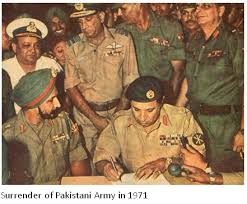
India’s role was multi layered and complex. It provided refuge to millions fleeing violence, offered training and support to Bangladeshi freedom fighters, and finally launched a full scale military operation that ended the genocide and dismantled Pakistani military rule in East Pakistan. The sacrifices made by Indian soldiers were immense. Thousands laid down their lives in a war that was not for territorial gain but for the liberation of a neighbouring people. India’s involvement was driven by both humanitarian concern and security compulsions, for a destabilised East Pakistan had triggered a massive refugee influx that threatened India’s social and economic stability.
Despite this monumental contribution, the relationship between India and Bangladesh has long been shaped by emotions running in opposite directions. On the one hand, the Awami League and Sheikh Mujibur Rahman’s ideological legacy upheld the gratitude felt towards India for its critical role in 1971. On the other hand, anti India rhetoric gradually embedded itself within sections of Bangladeshi society, especially among groups influenced by political Islam or nationalist sentiment. Over the decades, this rhetoric became a potent tool for political mobilisation, often overshadowing historical facts and overshadowing gratitude for the sacrifices offered during the Liberation War.
This sentiment also played a role in shaping political narratives in Bangladesh. While the Awami League maintained a cooperative stance towards India, opposing forces increasingly relied on anti India mobilisation to consolidate support. This tendency deepened as various political, economic, and ideological shifts took place in the country. Thus, even though India had been indispensable in helping Bangladesh achieve its independence, sections of the population began viewing cooperation with India as a sign of weakness or subservience. Leaders supportive of cross border collaboration were at times branded as insufficiently nationalist or even as aligned with foreign interests.
The political climate took a dramatic turn on July 5, 2024, when Sheikh Hasina was forcibly removed from power following a wave of unrest, social turbulence, and accusations circulated by opposition factions. Her ouster created a massive vacuum in Bangladesh’s political structure. Anti India rhetoric surged to unprecedented intensity, marking a new and uncertain phase in the nation’s history. Voices that had long criticised India found a new platform and amplified their claims, portraying the Awami League and Sheikh Hasina as mere instruments of Indian influence. This narrative gained traction particularly among Islamist groups and segments of the population disillusioned with the previous government.
With the weakening of the Awami League’s longstanding organisational power, Bangladesh entered a period of volatility. Reports of chaos, disorder, and the rise of hardline forces began to circulate widely. The fall of Sheikh Hasina brought to the surface deep rooted societal tensions that had been simmering beneath the surface for years. The Bangladesh that emerged in the months following her ouster appeared significantly different from the relatively stable and development focused nation that had been forming under her leadership.
The anti India surge in Bangladesh was not merely political but also cultural and ideological. Many Islamist factions began to assert themselves more openly, using religious identity as a rallying point to mobilise followers. The charged atmosphere created a sense of fear among minorities, particularly the Hindu community, which has historically faced periodic waves of violence and discrimination. In moments of political instability, minorities often become vulnerable targets. The post July 2024 unrest increased concerns for their safety and future.
Observers noted that the situation began to resemble a pre civil war environment. On one side were Islamist groups asserting a stricter religious identity and rejecting the secular foundations envisioned by Bangladesh’s founding leaders. On the other side were pro liberation elements, including veterans of the 1971 struggle, civil society groups, and democratic voices who feared that the nation might drift away from its foundational values. The conflict between these two competing visions appeared to be sharpening by the day, raising alarming questions about the country’s long term trajectory.
The instability also disrupted social harmony in numerous regions. Public institutions appeared weakened and political uncertainty caused economic anxieties to increase. Rising ideological polarization shaped the way communities interacted with one another and rumours or incendiary rhetoric found fertile ground. The absence of a stable and authoritative government structure contributed further to the disorder, allowing various factions to assert their influence.
In the midst of this upheaval, India’s relationship with Bangladesh entered one of its most sensitive phases since 1971. The regional balance of power was shifting rapidly. India, which had played an essential role in the liberation of Bangladesh, found itself being portrayed by certain groups as a destabilising force. This portrayal, although historically inaccurate, gained traction due to the charged political environment and growing influence of extremist elements.
India had always maintained a strategic and humanitarian interest in the well being of Bangladesh. A stable and progressive Bangladesh is essential for regional peace, economic connectivity, and security cooperation. The two nations share deep linguistic, cultural, and historical ties. Yet the post 2024 atmosphere complicated diplomatic engagement. Efforts to maintain friendly relations were increasingly challenged by political rhetoric within Bangladesh that framed any cooperation with India as unacceptable or conspiratorial.
The Soviet Union’s involvement in 1971 had once cemented a powerful triangle between India, Moscow, and the Bangladeshi liberation movement. The strategic support offered by the Soviets deterred international intervention by major powers hostile to Bangladesh’s cause. That partnership helped shape the outcome of the war and ensured that Bangladesh emerged with international legitimacy. However, in the present era, global geopolitics have shifted dramatically and the regional strategic environment is far more complex than it was in 1971. Bangladesh now faces pressures from multiple directions including global power competition, internal ideological battles, and fluctuating economic conditions.
Against this backdrop, the future of Bangladesh remains filled with uncertainty. The ideological struggle between secular democratic elements and rising Islamist forces continues to intensify. The absence of a stable central leadership and the breakdown of political order contribute to fears that the country may approach conditions resembling a civil conflict. While such an outcome is not inevitable, it is a risk acknowledged by analysts observing the rapid shifts taking place within society.
The position of the Hindu community has become particularly precarious. Historically, Hindus in Bangladesh have faced episodes of targeted violence or political scapegoating during moments of unrest. The unrest following July 2024 heightened their vulnerability. Reports of fear, displacement, and insecurity suggested that the minority population was confronting one of its most challenging periods in recent decades. The survival of Hindu communities in Bangladesh has always depended on the strength of democratic institutions and the enforcement of the rule of law. With institutions under strain, their future appears increasingly fragile (India Bangladesh Crossroad).
As the nation grapples with these challenges, the fundamental question confronting Bangladesh is whether it can revive the spirit of the Liberation War and uphold the values of pluralism, equality, and democratic governance. The freedom fighters of 1971 did not envision a country consumed by sectarian conflict or anti minority sentiment. Their struggle was rooted in the pursuit of dignity, linguistic rights, and self determination. Today’s tumultuous landscape stands in stark contrast to those ideals.
Yet history has shown that Bangladesh has repeatedly overcome adversity. Its resilience is woven into the fabric of its society. The people of Bangladesh have survived natural disasters, political upheaval, and economic struggles with remarkable courage. Whether that resilience will be enough to guide the nation through this current period of crisis remains to be seen. The outcome will depend on leadership, the strength of civil society, and the willingness of citizens to reject divisive narratives.
For India, the unfolding situation is deeply concerning. The future stability of Bangladesh is closely tied to regional peace and cooperation. India has consistently emphasised the importance of mutual development, shared prosperity, and peaceful coexistence. The events following July 2024, however, demand a careful and measured approach that balances strategic interests with humanitarian considerations. A destabilised Bangladesh could unleash unpredictable consequences for the region and complicate longstanding ties between the two neighbours.
Bangladesh today stands at a crossroads similar in gravity, though vastly different in nature, to the one it faced in 1971. The choices its leaders and people make in the coming years will shape the future of the nation. Will it embrace the inclusive and democratic vision that inspired its liberation or will it drift into deeper ideological fragmentation. Will societal harmony be restored or will unrest escalate further.
The answers are yet to unfold. What is clear is that the sacrifices made during the Liberation War and the support offered by India and the Soviet Union in 1971 remain historical cornerstones. Those sacrifices helped create a nation founded on the values of freedom and justice. As Bangladesh confronts its present turmoil, returning to those foundational ideals may be the only path that ensures peace, stability, and a future rooted in harmony.
Bangladesh Liberation War Archive
Animitra Chakraborty

